How Much Storage Space Do I Need?
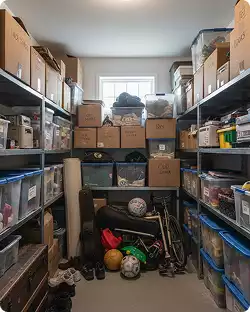
How Much Storage Space Do You Need: A Complete Guide
Figuring out how much storage space you need can feel overwhelming, whether you're clearing out a garage, downsizing to a smaller home, or storing business inventory between locations. The answer depends on what you're storing and how you plan to organize it. Understanding common storage space sizes and how to estimate your needs helps you avoid paying for space you don't use.
Common Sizes For Private Storage Spaces
Private storage spaces come in all shapes and sizes—from spare closets and basement corners to entire garages and warehouse areas. Understanding typical space dimensions helps you estimate costs and find a space that matches your actual needs without overpaying.
5x5 Storage
A 5x5 space is roughly equivalent to a small closet. At 5 feet by 5 feet, you get 25 square feet of floor space and approximately 200 cubic feet of volume with standard 8-foot ceilings.
What fits:
Furniture: Small dresser, nightstand, chair, or a few small items
Boxes: 10–15 medium boxes stacked efficiently
Best for: Dorm room storage, seasonal decorations, sports equipment, or small apartment decluttering
This size works well for students storing belongings over summer break or anyone needing temporary storage between moves. If you're storing winter holiday decorations, camping gear, or a collection of sports equipment, a 5x5 space typically provides enough room without wasting money on unused square footage.
5x10 Storage Space
This popular mid-sized option equals a large walk-in closet at 50 square feet and approximately 400 cubic feet.
What fits:
Furniture: Full or queen mattress set, small couch, TV stand, dining chairs
Boxes: 20–30 medium boxes
Best for: One-bedroom apartment contents, office furniture, or small business inventory
The narrow 5-foot width makes this space ideal for long items like mattresses, skis, or ladders. It's one of the most commonly rented sizes for apartment dwellers who need temporary storage during a move or while traveling. A real example: if you're moving from a 600-square-foot apartment and plan to keep your couch, bed, and dining table, this size typically accommodates everything with room to walk.
10x10 Storage Space
The 10x10 represents a popular "standard" size at 100 square feet and approximately 800 cubic feet.
What fits:
Furniture: Entire one-bedroom apartment setup including couch, bed, dining table with chairs, dresser, appliances
Boxes: 30–50 medium boxes depending on stacking
Best for: One- to two-bedroom apartment moves, small family storage, or business records
This size offers enough floor space to create a walkway for accessing items in the back. It can also fit a motorcycle or small vehicle if not filled with household goods. Many people underestimate how much a 10x10 holds—it's roughly equivalent to half of a standard two-car garage, which means you can fit the contents of most one-bedroom apartments with strategic stacking.
10x30 Storage Space
This represents one of the larger private storage spaces available at 300 square feet and approximately 2,400 cubic feet.
What fits:
Furniture: Contents of a four- to five-bedroom house including all major appliances, patio furniture, and bulky items
Boxes: 100+ boxes
Best for: Full-house moves, long-term storage during renovations, or commercial inventory
This size can accommodate a vehicle plus household belongings or serve as warehouse space for small businesses. Spaces this large often come with drive-up access for easier loading, which saves time and reduces the physical strain of moving heavy furniture.
Space Size | Square Feet | Cubic Feet | Equivalent To | Best For |
5x5 | 25 sq ft | 200 cu ft | Small closet | Seasonal items, small apartment decluttering |
5x10 | 50 sq ft | 400 cu ft | Walk-in closet | One-bedroom apartment, office furniture |
10x10 | 100 sq ft | 800 cu ft | Small bedroom | One- to two-bedroom apartment |
10x30 | 300 sq ft | 2,400 cu ft | 1.5-car garage | Four-bedroom house, business inventory |
How To Measure Or Estimate The Space You Need
Choosing the right storage size requires a simple three-step estimation process that takes the guesswork out of your rental decision.
List Your Items And Consider Growth
Create an inventory of everything you plan to store, broken down into categories. List large furniture items individually—beds, couches, tables, dressers, and appliances. Count your boxes and categorize by size: small book boxes are about 1.5 cubic feet, medium boxes are 3 cubic feet, and large boxes are 5 cubic feet. Don't forget specialty items like bikes, sports equipment, musical instruments, and seasonal decorations.
Account for items you might add over the next 6–12 months. People typically underestimate volume—what seems like "a few boxes" often means 20–30 boxes once packed. A common mistake is forgetting about the items you'll accumulate during the rental period. Add 20–30% extra space to your estimate to avoid cramming items or needing to upgrade later.
Convert To Square Feet Or Cubic Feet
You can estimate space needs using two methods.
Method A: Room-based estimation (quick and simple)
One small bedroom of belongings = 25–50 sq ft (5x5 or 5x10 space)
One-bedroom apartment = 50–100 sq ft (5x10 or 10x10 space)
Two-bedroom apartment = 100–150 sq ft (10x10 or 10x15 space)
Three-bedroom house = 150–200 sq ft (10x15 or 10x20 space)
Method B: Cubic feet calculation (more precise)
Here's a practical example: Let's say you're storing a couch (7 feet long × 3 feet deep × 3 feet tall = 63 cubic feet), a queen mattress and box spring (5 feet × 6.5 feet × 1.5 feet = 49 cubic feet), a dresser (4 feet × 2 feet × 5 feet = 40 cubic feet), and 25 medium boxes (25 × 3 cubic feet = 75 cubic feet).
Your total is 227 cubic feet. Add 25% buffer for gaps and irregular shapes (284 cubic feet), then divide by 8-foot ceiling height to get 35.5 square feet of required floor area—meaning a 5x10 space (50 sq ft) would work comfortably.
Check For Special Items
Certain belongings require special consideration due to size or fragility.
Special storage considerations:
King-size mattresses: Measure 76 inches by 80 inches and need a space at least 7 feet wide; always use a king size moving mattress cover to protect against dust and moisture
Vehicles: Cars typically measure 6–7 feet wide and 15–18 feet long, requiring at least a 10x20 space
Tall items: Ladders, skis, or shelving units may need higher ceilings (ask the space owner about ceiling height)
Climate-sensitive items: Electronics, wooden furniture, photos, and documents need climate-controlled spaces
A king-size mattress won't fit diagonally in a 5x10 space, which is why measuring your largest items first matters. Climate control typically adds $20–50 per month to your rental cost but prevents damage to temperature-sensitive belongings worth far more than the additional expense.
Tips To Optimize and Organize Your Storage
Choosing the right storage size is only half the solution—organizing your space efficiently maximizes capacity and keeps items accessible.
Use A Walk In Closet Shelf Or Tall Open Storage Unit
Vertical space often goes wasted in storage areas. Adding shelving can increase usable capacity by 50–100% compared to floor stacking alone.
Vertical storage strategies:
For home storage: A walk in closet shelf system can double or triple storage by stacking items vertically; install shelves up to 7 feet high for easy access
For rented spaces: Bring freestanding tall open storage units (metal shelving racks) that typically measure 6 feet tall and hold 200–300 pounds per shelf
Stacking approach: Place heavy, rarely-needed items on bottom shelves; keep frequently accessed items at eye level; use top shelves for lightweight seasonal items
Bedroom lockers or small lockers for home use work well for valuables or documents you want to keep secure within a larger storage space. Label all boxes on at least two sides (top and one long side) so you can identify contents without moving everything. Create a simple inventory list—even a basic spreadsheet with box numbers and contents saves hours when you need to find something specific.
Maintain an Ongoing Storage Room Size Checklist
Create a simple checklist or spreadsheet to track what you're storing and how much space it actually uses. Storage needs change—you might downsize after decluttering or need to upgrade as you acquire more belongings.
Review your storage every 6–12 months with these questions: Are you using all the space you're paying for? Could you consolidate into a smaller space and save $30–50 per month? Have you accessed certain items in over a year (meaning they might be candidates for donation or sale)? The storage space that worked for a temporary three-month move might be too large and expensive for long-term use.
Why Storage Needs Grow Over Time
Most people find they need more storage five years after moving than they did initially. Life changes like marriage, children, aging parents moving in, or starting a home business all add belongings. We naturally accumulate items faster than we discard them—hobbies, collections, and sentimental items build up over time.
The work-from-home shift means many people now need space for equipment, supplies, and files previously kept at a workplace. A couple renting a 5x10 space for apartment overflow might need a 10x15 space after buying a house and having kids. Similarly, someone who started with 10 boxes of documents might accumulate 50 boxes over five years of business growth.
Plan for growth when choosing storage. If you're on the border between two sizes (for example, your estimate shows you need 85 square feet), choose the larger one—you'll likely fill it within a year and upgrading later means moving everything twice. Storage is an investment in flexibility that reduces stress and gives you room to grow without the hassle of frequent relocations.
Make The Most Of Every Space
Storage needs vary widely based on what you own and how you use it, but the calculation process remains straightforward: inventory your items, estimate volume, and add buffer space. The right amount of storage today might not be enough tomorrow, so planning ahead saves you from the hassle of upgrading later. The key is being realistic about what you own and honest about what you'll actually use.
Finding the right storage space doesn't mean settling for overpriced, inconvenient options. EMPTYSPACE connects people with flexible private storage spaces that fit their actual needs—whether that's a spare closet for seasonal items or a large garage for business inventory. Our marketplace lets you compare pricing, locations, and amenities from multiple space owners in your area, so you find the best fit instead of being limited to what commercial facilities offer.
Unlike traditional storage companies that lock you into long-term contracts, our platform shows you options with flexible terms. Space owners set their own rates and policies, which creates real competition and better prices for renters. You can filter by the features that matter to you—climate control, 24-hour access, security cameras, drive-up access—and see only spaces that meet your specific requirements.
Ready to find storage space that works for your situation? Browse available spaces on EMPTYSPACE or list your own unused space to start earning income today.
FAQs About Storage Space Needs
How much does a 100 square feet shed typically cost to rent?
Rental costs for a 100 square feet shed or storage space typically range from $75 to $200 per month depending on location, climate control, and amenities. Urban areas and climate-controlled spaces cost more than rural or standard spaces.
What size storage space do I need for a 250 sq ft studio apartment?
A 250 sq ft studio apartment's contents usually fit in a 5x10 or 10x10 storage space (50–100 sq ft), depending on how much furniture you have. If you own minimal furniture, a 5x10 space should suffice.
How can I store a king mattress in a small storage space?
A king mattress measures 76 by 80 inches and needs a space at least 7 feet wide, so a 10x10 or larger space works best. Always use a king size moving mattress cover to protect it from dust, moisture, and pests during storage.
How do I know if I need climate-controlled storage?
You need climate-controlled storage if you're storing electronics, wooden furniture, photos, documents, musical instruments, or fabrics for more than a few months. Temperature and humidity fluctuations can warp, fade, or damage these items.
How many cubic feet does a typical 10x10 storage space have?
A 10x10 storage space with standard 8-foot ceilings provides approximately 800 cubic feet of storage. If the space has 10-foot ceilings, you'll have closer to 1,000 cubic feet.
What is a typical locker size for personal storage?
A typical locker size for personal storage ranges from 1x1 to 3x3 feet, providing 1–9 square feet of space. These work well for storing small valuables, documents, or seasonal items that don't require a larger storage space.
Find Your EmptySpace